
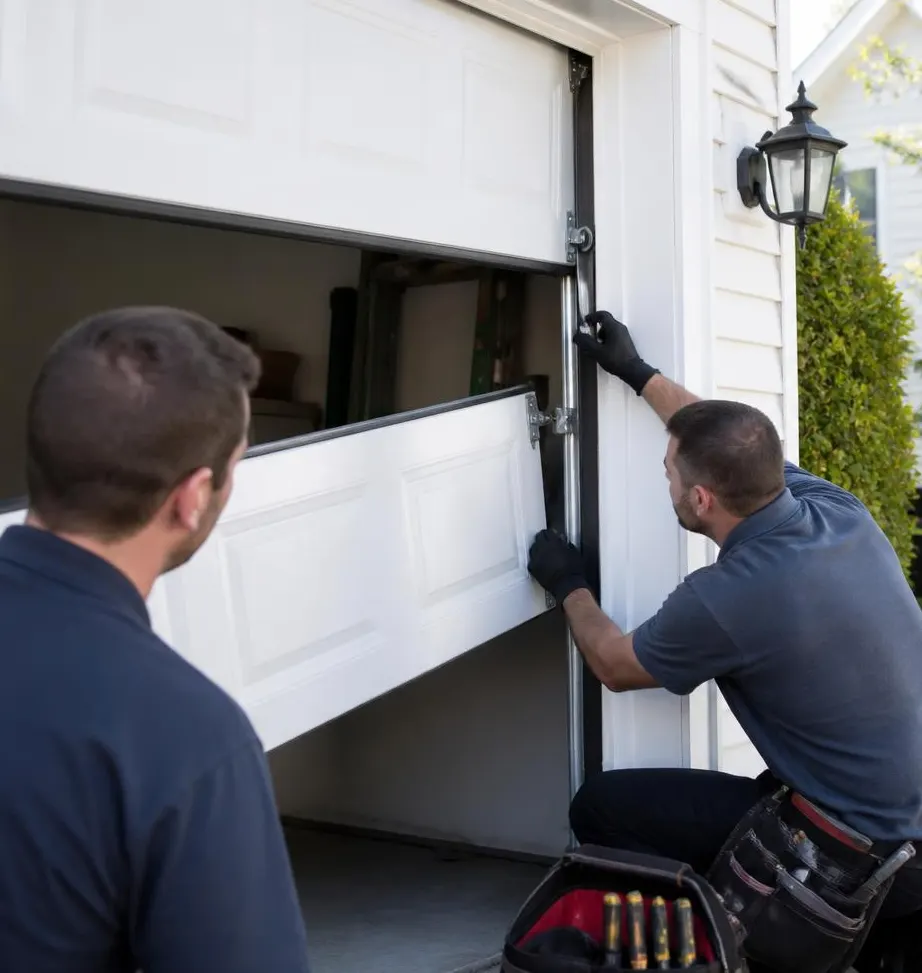
Skip the pre-winter check this year and you're betting that months of dried-out lubricant, dusty tracks, and sun-brittled weatherstripping will somehow hold up once the rain starts soaking into every gap. They usually don't. The common result is a door that binds halfway up, a spring that finally snaps under the added strain of moisture and cold, or an opener that strains and trips its safety sensors at the worst possible moment — usually when you're already running late in the rain.
What the Dry Months Actually Did to Your Door
Garage doors in this part of California spend a good chunk of the year dealing with heat, dust, and dry air, sometimes with wildfire smoke drifting through as well. None of that is kind to moving parts. Grease and lubricant on tracks, rollers, and hinges dries out and turns gummy. Fine dust works its way into roller bearings and track channels, adding friction exactly where you don't want it. Rubber weatherstripping along the bottom and sides gets stiff and starts to crack from UV exposure, which means it won't seal properly once winter rain actually shows up.
None of this causes a dramatic failure in September. It just quietly loads the dice, so that when the system finally gets stressed by cold mornings and wet hardware, something gives.
Checking the Hardware Before the Rain Tests It
A few things are worth a hands-on look before the weather turns:
- Springs — Look for visible gaps, rust spots, or stretching in the coils. A spring that's already fatigued from a long dry season is far more likely to snap once humidity and temperature swings add extra load.
- Cables — Frayed strands or visible rust near the bottom brackets mean the cable is close to failing. A cable that lets go can drop a heavy door fast, so this isn't a wait-and-see item.
- Rollers and tracks — Dust buildup plus dried lubricant often shows up as a grinding or jerky motion. Clean the tracks and reapply a garage-door-specific lubricant rather than general household oil, which attracts more grit than it solves.
- Seismic retrofit hardware — If your garage has earthquake bracing or reinforced panels, check that bolts and brackets haven't loosened from months of door use and temperature expansion. Loose hardware here matters more once wet, heavier air and shifting wood framing come into play.
The Opener and Power Questions Nobody Thinks About
Winter storms bring a higher chance of power blips, and a garage door opener that depends entirely on grid power leaves you stuck choosing between manually hauling the door open or waiting out the outage. If your opener doesn't have battery backup, it's worth asking about one before the first real storm rolls through, not during it. It's also a good time to check that the manual release cord works smoothly — many homeowners never test it until they actually need it, and a release mechanism gummed up with old lubricant residue can fail right when it's needed most.
A Pre-Winter Tune-Up Checklist
- Wipe down tracks and rollers to remove dust and old lubricant buildup
- Apply fresh lubricant to hinges, rollers, and the torsion spring
- Inspect weatherstripping along the bottom seal and sides for cracking or gaps
- Test the auto-reverse safety feature by placing an object in the door's path
- Check all cables and springs for rust, fraying, or visible wear
- Confirm the opener's battery backup is charged and functioning, if equipped
- Tighten any loose bolts on tracks, brackets, or seismic retrofit hardware
When to Call Los Angeles Garage Door Repair
If you spot a frayed cable, a spring with visible gaps or rust, or a door that's suddenly louder or jerkier than it used to be, that's not a DIY lubrication fix — it's a sign the hardware is near the end of its working life. Our team handles Garage Door Cable Repair and Garage Door Spring Repair regularly this time of year, replacing worn components before they fail during a storm rather than after. We also do full Garage Door Tune-Up & Maintenance visits that cover everything on the checklist above, so you're not guessing whether your door is actually ready for winter weather.
If your garage door has been acting up after a long, dusty summer, call Los Angeles Garage Door Repair before the rain starts testing every weak point. We serve homeowners throughout Los Angeles, Pasadena, Glendale, Burbank, Eagle Rock, Highland Park, South Pasadena, and Alhambra, and we'd rather get your door squared away now than pull up to an emergency call in the middle of a storm.